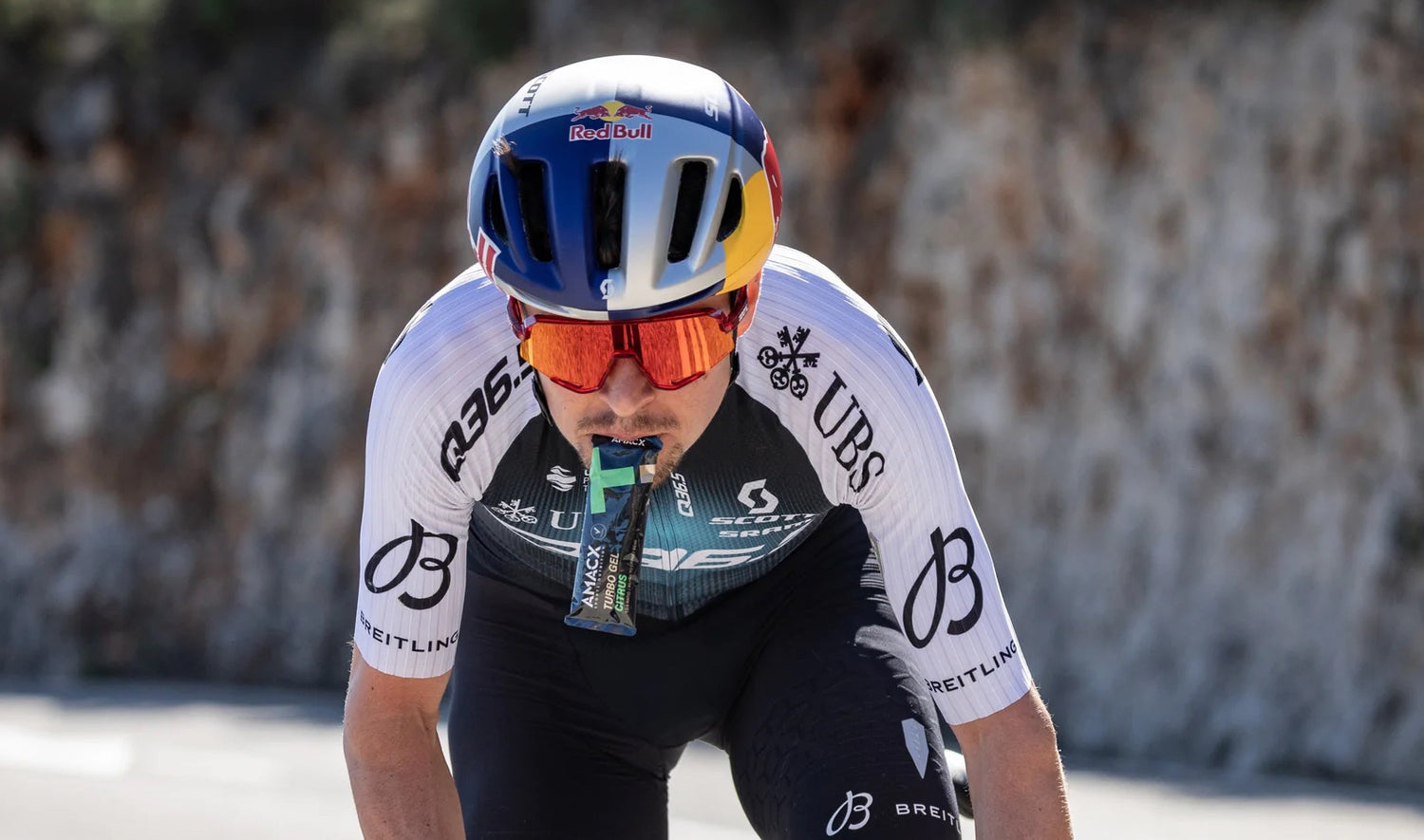
What fuelling actually looks like at one of the hottest races on earth
Yes… we really do mean the heat.
The Oman Desert Marathon is a multi-day ultramarathon run deep in the Omani desert, covering roughly 165 kilometres across six stages. Athletes carry their own mandatory gear, self-manage their fuelling, and race across sand dunes and exposed terrain where daytime temperatures regularly climb beyond 40°C.
There is no shade, no mercy, and no room for “I’ll just see how I go”. This race is not decided by leg strength alone. It is decided by who can keep their body functioning when the heat is actively trying to shut it down.
Many athletes do not fail because they cannot run far enough. They fail because the heat exposes fuelling mistakes… quickly and without apology.
There is no shade, no mercy, and no room for “I’ll just see how I go”. This race is not decided by leg strength alone. It is decided by who can keep their body functioning when the heat is actively trying to shut it down.
Many athletes do not fail because they cannot run far enough. They fail because the heat exposes fuelling mistakes… quickly and without apology.
Why heat breaks athletes (and does not care how fit you are)
In desert races, medical tents are not full of under-trained runners. They are full of fit, motivated athletes whose fuelling plans quietly fell apart under heat stress.
The usual suspects:
In desert races, medical tents are not full of under-trained runners. They are full of fit, motivated athletes whose fuelling plans quietly fell apart under heat stress.
The usual suspects:
- Severe dehydration
- Sodium depletion
- A gut that simply refuses to cooperate
- Heat exhaustion snowballing into heat illness
Hydration in Oman: this is not a “drink when thirsty” situation
Sweat losses in the Omani desert can exceed multiple litres per hour. At that point, thirst is not a signal. It is a warning light you ignored 20 minutes ago.
Athletes who struggle usually fall into one of two camps:
Successful desert strategies involve:
Sweat losses in the Omani desert can exceed multiple litres per hour. At that point, thirst is not a signal. It is a warning light you ignored 20 minutes ago.
Athletes who struggle usually fall into one of two camps:
- They do not drink enough
- They drink plenty of water… and almost no electrolytes
Successful desert strategies involve:
- Drinking from the opening kilometres
- Planned, consistent intake rather than panic sipping
- Electrolytes with real sodium, not homeopathic levels
Sodium: the quiet hero doing all the work
If carbohydrates are the fuel, sodium is the thing stopping the whole system from short-circuiting.
Heavy sweating strips sodium at rates most athletes have never experienced. When replacement falls behind:
If carbohydrates are the fuel, sodium is the thing stopping the whole system from short-circuiting.
Heavy sweating strips sodium at rates most athletes have never experienced. When replacement falls behind:
- Muscles forget how to muscle
- Nerve signals misfire
- The gut waves a white flag
- Cramping appears out of nowhere
Carbohydrates: still essential, just wildly unappealing
Here is the cruel desert paradox. Heat increases carbohydrate demand while simultaneously killing appetite and slowing digestion.
Desert athletes adapt by:
Here is the cruel desert paradox. Heat increases carbohydrate demand while simultaneously killing appetite and slowing digestion.
Desert athletes adapt by:
- Leaning heavily on drink mixes and gels
- Avoiding high fibre and high fat foods
- Feeding the body in small, frequent doses
What this looks like in numbers
(Desert-level fuelling, per hour)
Fluids: ~600–1,200 ml
Sodium: ~700–1,500 mg
Carbohydrates: ~60–90 g
These numbers feel aggressive because they are. They are also the reason some athletes keep moving while others are negotiating with a medic.
Zooming out: what this means for your summer training
You may never run across Omani sand dunes, but your body does not know that. It only knows heat, sweat, and stress.
If you have ever:
How to apply desert lessons at home
That is exactly why we built the Fuelling Hub Fuel and Hydration Planner. It takes lessons from extreme environments and turns them into practical guidance for everyday training.
You may never run across Omani sand dunes, but your body does not know that. It only knows heat, sweat, and stress.
If you have ever:
- Cramped despite “drinking heaps”
- Felt dizzy or foggy late in a session
- Looked at food in the heat and felt personally offended
How to apply desert lessons at home
- Hydration: In the heat, water alone is rarely enough.
- Sodium: Salt crust on your kit means higher needs than you think.
- Carbohydrates: Hot sessions favour liquids and gels over solids.
- Timing: Fuel earlier than feels necessary. Waiting for symptoms is already too late.
That is exactly why we built the Fuelling Hub Fuel and Hydration Planner. It takes lessons from extreme environments and turns them into practical guidance for everyday training.